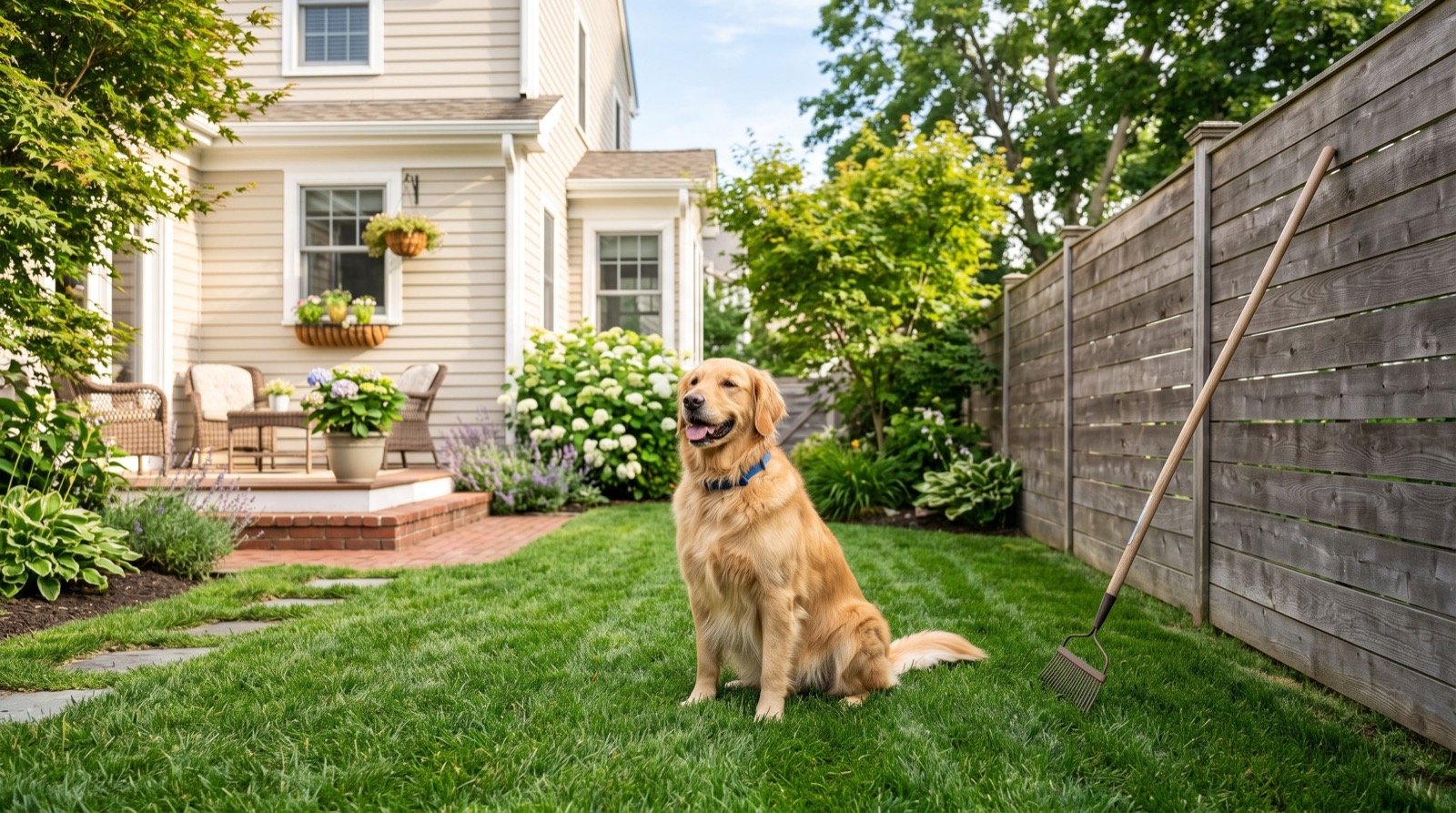
Most dog owners assume the brown patches spreading across their lawn are a watering problem, a fungus, or maybe the neighbor’s weed killer drifting over the fence. More often than not, the real culprit is sitting in plain sight. Dog waste left on grass does slow, steady damage that no amount of fertilizer can undo, and by the time the yellow rings turn into bare dirt, the harm is already weeks deep.
Understanding how waste interacts with turf changes the way you think about cleanup. It stops being a chore you do for appearances and becomes basic lawn maintenance, on the same level as mowing and edging. This article walks through exactly what happens beneath your feet and how a consistent routine keeps your grass green instead of scarred.
Why Dog Waste Burns Your Grass
Dog stool and urine are both loaded with nitrogen. In small, diluted amounts nitrogen feeds a lawn, which is why it appears in almost every bag of fertilizer. The problem is concentration. When a dog goes in the same few spots, the nitrogen load overwhelms the roots and pulls moisture out of the blades, producing the classic scorched look. The center dies while a darker green ring forms at the edge where the dose was lighter.
Solid waste adds a second layer of trouble. It smothers the grass underneath, blocking sunlight and trapping moisture against the crown of the plant. Sit long enough and that patch simply suffocates. Removing waste quickly is the single most effective thing you can do to prevent both burn patterns.
The 48-Hour Window
Timing matters more than people realize. Fresh waste that gets picked up within a day or two causes almost no lasting damage. Once it has been rained on, worked into the soil, and given time to leach, the nitrogen has already reached the roots. That is why weekend-only cleanup leaves a yard looking patchy no matter how thorough the pass is.
The goal is not perfection, it is frequency. A quick lap every day or every other day keeps the concentration low enough that your turf can shrug it off. Pair that with a hose rinse of the favorite spots and you dilute the nitrogen before it settles.
Tools That Make Daily Cleanup Realistic
Nobody sticks with a routine that hurts their back or takes twenty minutes. The equipment you choose decides whether daily pickup actually happens. A long-handled scooper lets you work standing up, which matters enormously when you are doing it seven days a week. If yours is flimsy or you are still bending over with a plastic grocery sack, it is worth searching for a Pooper scooper near me and upgrading to something built for repeated use.
Collection matters too. Waste has to go somewhere, and thin bags tear at the worst moment. Keeping a roll of sturdy containment on hand turns an unpleasant job into a thirty-second task.
Reseeding the Spots You Already Lost
If your lawn already has bare rings, cleanup alone will not bring them back. Dead grass does not recover. You will need to rake out the dead material, loosen the top layer of soil, and drop fresh seed. Water lightly and keep the dog off that patch until the new blades establish, which usually takes two to three weeks.
Some owners keep a small bag of quick-repair seed mix in the garage for exactly this. Treating spots as they appear stops one burn ring from becoming a connected patch of dirt across half the yard.
Managing Waste on Collection Day
A week of daily pickups adds up, and where you store it between trash days affects your whole outdoor space. Odor and leakage are the two complaints that push people back toward letting waste pile up in the grass. A dedicated bin with a tight lid solves both. Line it with heavy duty garbage bags so nothing seeps through, and you can set it at the curb without a second thought.
Keeping the storage step clean is what makes the whole system sustainable. When the disposal end is easy, the pickup end stays consistent.
When to Call in Help
Some situations are beyond a weekend routine. A yard that has been neglected for a season, a household with three or four large dogs, or an owner dealing with mobility issues may benefit from a professional service. There are dependable specialists who handle scheduled cleanups so the burden never builds past what the grass can recover from.
Even if you plan to do the work yourself long term, a single deep-clean visit to reset a badly damaged yard can be worth it. It gives you a clean slate to maintain rather than a backlog to fight.
Watering and Fertilizing Around the Problem
Lawn care and waste management work best together. Deep, infrequent watering encourages roots to grow down where they are more resilient to nitrogen spikes. Over-fertilizing on top of a dog’s daily contributions pushes the total nitrogen load too high, which is a common mistake. If you have an active dog, ease off the store-bought feed and let the natural inputs do part of the work, as long as you are removing the solids promptly.
Aerating once a year also helps. It breaks up compacted soil so water and air reach the roots, which speeds recovery in the spots that took the most abuse over the previous seasons.
Key Takeaways
- Nitrogen in dog waste burns grass in concentrated doses, creating dead centers with dark green rings.
- Pick up solid waste within 48 hours to prevent lasting root damage.
- A long-handled scooper and sturdy bags make daily cleanup fast enough to actually maintain.
- Dead patches need reseeding, not just cleaning, to recover.
- Rinsing favorite spots and easing off extra fertilizer keeps the total nitrogen load manageable.
A Greener Yard Starts With a Simple Habit
The connection between waste and lawn health is direct and unforgiving, but it is also completely within your control. Grass does not need a miracle product to stay green. It needs the daily insult of concentrated nitrogen removed before it can do damage. Build a short, repeatable routine around the right tools, handle disposal cleanly, and reseed the spots you have already lost. Within a season you will see the difference, and the yard your dog loves to run across will finally look the part.